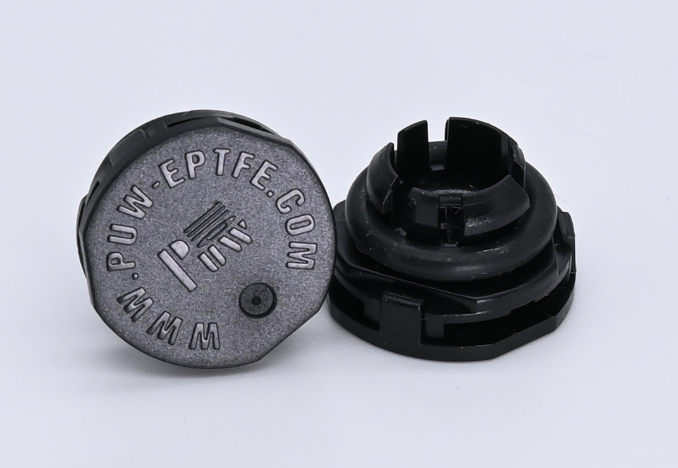
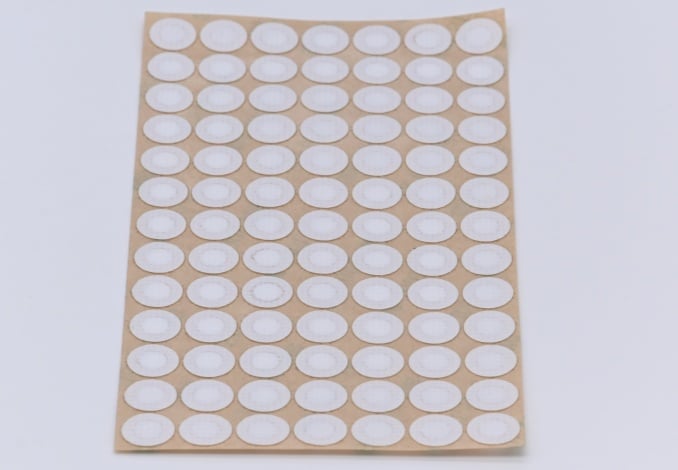
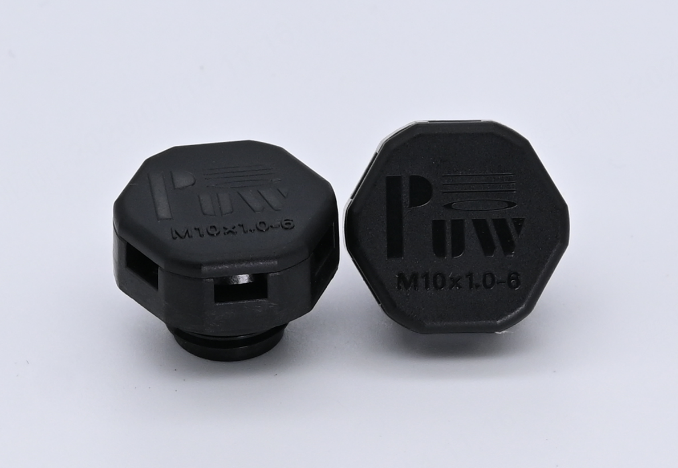
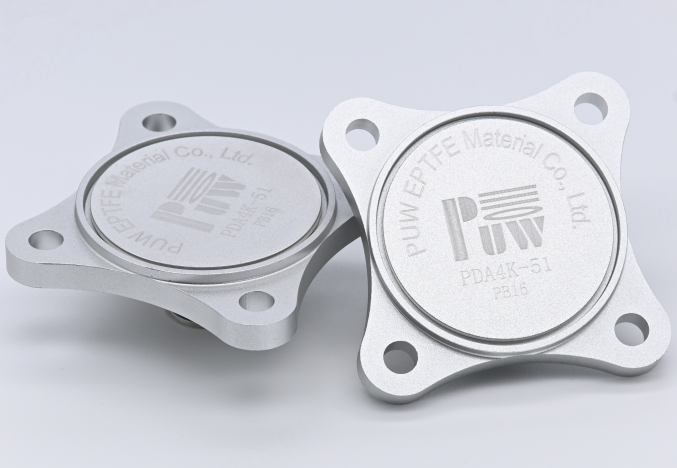
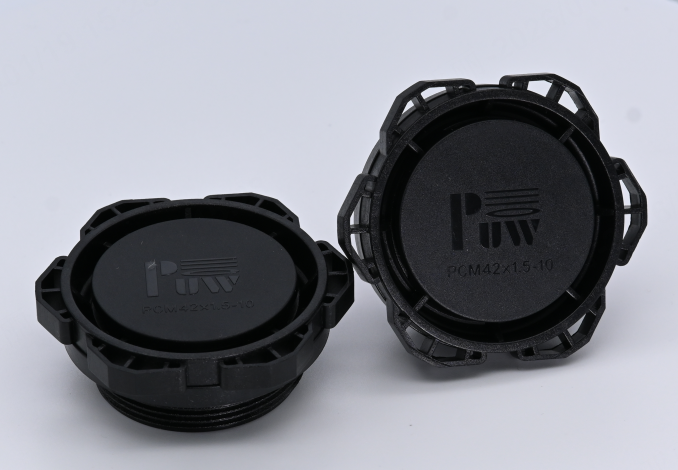
The explosion-proof valve is a key component that enables a battery pack to balance internal and external pressure differentials and to achieve rapid pressure relief during thermal runaway. Its selection directly affects sealing, water immersion protection, and thermal runaway safety. PUW's technical team has summarized the key points for explosion-proof valve selection and emphasizes that systematic matching should be carried out around seven basic parameters:
1.IP protection rating;
2.The pressure at which the enclosure may crack or deform;
3.Cell thermal runaway gas release rate;
4.Internal net free volume of the pack;
5.Operating temperature;
6.Temperature rise rate;
7.Installation method.
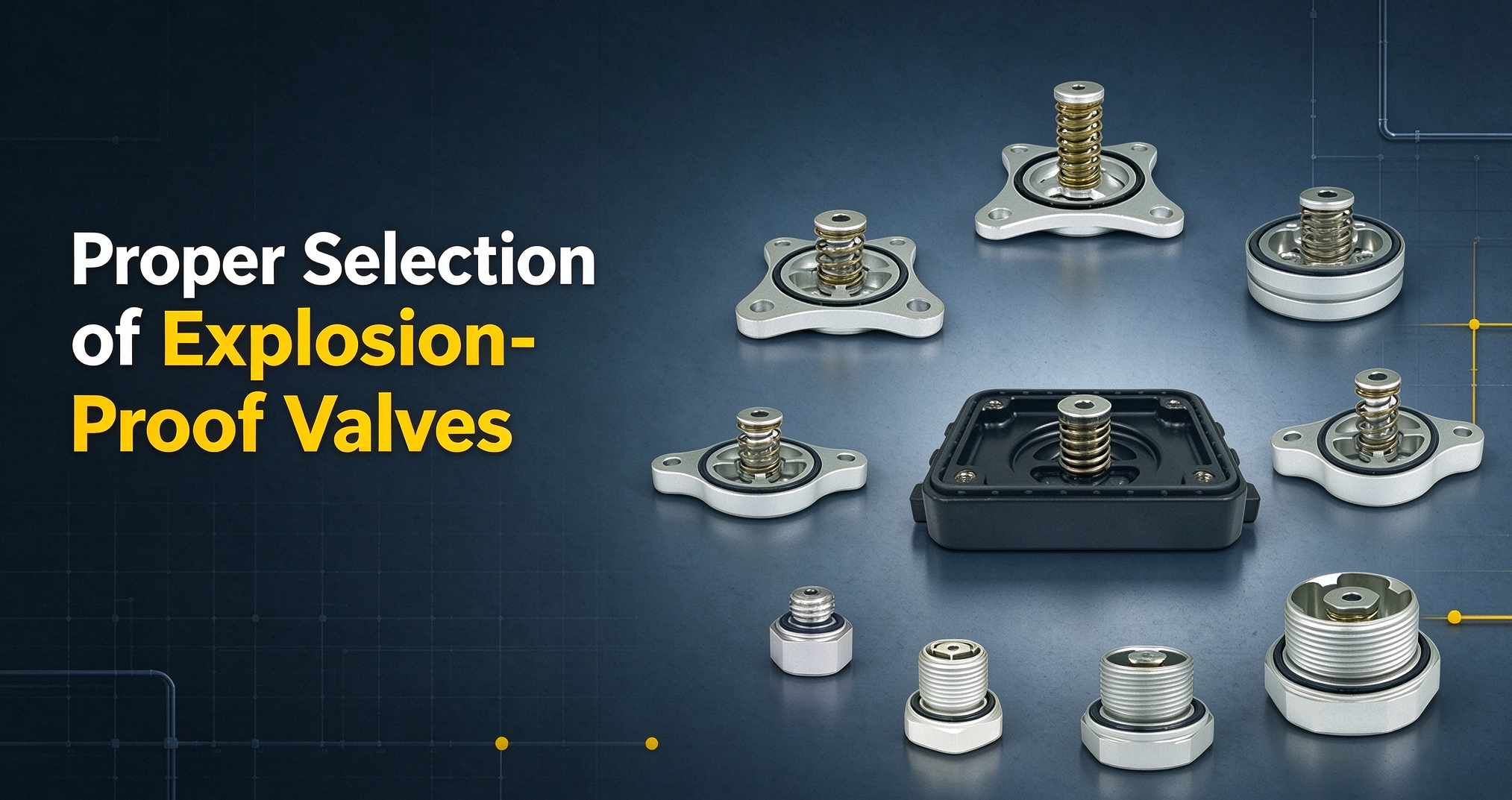
▶Calculation of Vent Rate Requirement for Explosion-Proof Valve Under Normal Conditions----The normal vent rate is used to balance the internal and external pressure differential under normal operating conditions.
When the temperature inside the pack enclosure rises, the internal gas pressure increases, creating a pressure differential with the outside. When an explosion-proof valve is installed on a sealed pack, gas is released to the outside through the waterproof breathable membrane, ultimately achieving pressure balance.
According to the ideal gas equation PV=nRT, after the gas temperature in a sealed enclosure rises, the pressure increase:ΔP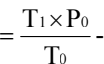 P0, the ventilation rate required to achieve equilibrium after temperature rise:Q=V
 t .
P0—initial pressure, i.e., 1 standard atmosphere, approximately 101.325 kPa
T0—initial temperature in℃ + 273.15
T1—temperature ℃ after temperature rise + 273.15
V1—net free volume of the pack
t—temperature rise time, i.e., the venting time required
Based on the basic pack information (internal net free volume, operating temperature, and temperature rise rate) and the above formula, it is calculated that, without an explosion-proof valve, the gas pressure differential between the inside and outside of the enclosure will reach ΔP ≈ XXX kPa, and the theoretical ventilation rate required is approximately XXX ml/min. In practice, the ventilation rate is affected by multiple factors such as the internal structure of the battery pack, the spacing between the battery modules and the inner wall of the battery enclosure, and the pressure differential across the breathable membrane. To meet reliability requirements, a reliability margin is considered. In industry selection, a safety factor of 1.2 times the theoretical value is generally adopted. Therefore, the theoretical ventilation rate requirement for the explosion-proof valve under this condition is approximately: ≥ XXX ml/min.
▶Calculation of Pressure Relief and Venting Capacity Required During Battery Pack Thermal Runaway-----During thermal runaway, the explosion-proof valve must rapidly release the large amount of gas instantly generated by the cells to prevent the enclosure from bursting.
According to the cell thermal runaway gas flow rate of XX L/min in the basic pack information, this is the minimum pressure-relief venting capacity that the explosion-proof valve must handle under thermal runaway conditions.
▶Selection of Opening Pressure for Explosion-Proof Valve
①The opening pressure of the explosion-proof valve must be lower than the ultimate pressure that the enclosure can withstand.
This ensures that, in the event of thermal runaway, the explosion-proof valve bursts and relieves pressure first; the explosion-proof valve opens before the enclosure cracks. At the same time, a safety margin should be reserved, and the pressure should not approach the pressure-bearing limit of the enclosure.
②The venting rate after the explosion-proof valve opens must be ≥ the maximum gas generation rate of the cells during thermal runaway.
At the instant of thermal runaway, the cells generate a large amount of gas. The pressure-relief capacity of the explosion-proof valve must cover the maximum gas generation rate to avoid continuous pressure accumulation inside the enclosure and resulting enclosure bursting.
③The higher the burst opening pressure, the better the sealing performance of the explosion-proof valve, especially for water immersion sealing.
 Hot News
2026-10-20
2026-09-11
2026-09-01
2026-08-21
2026-08-13
2026-07-29


 EN